Urgent Alerts: Our Never-Ending State of Emergency
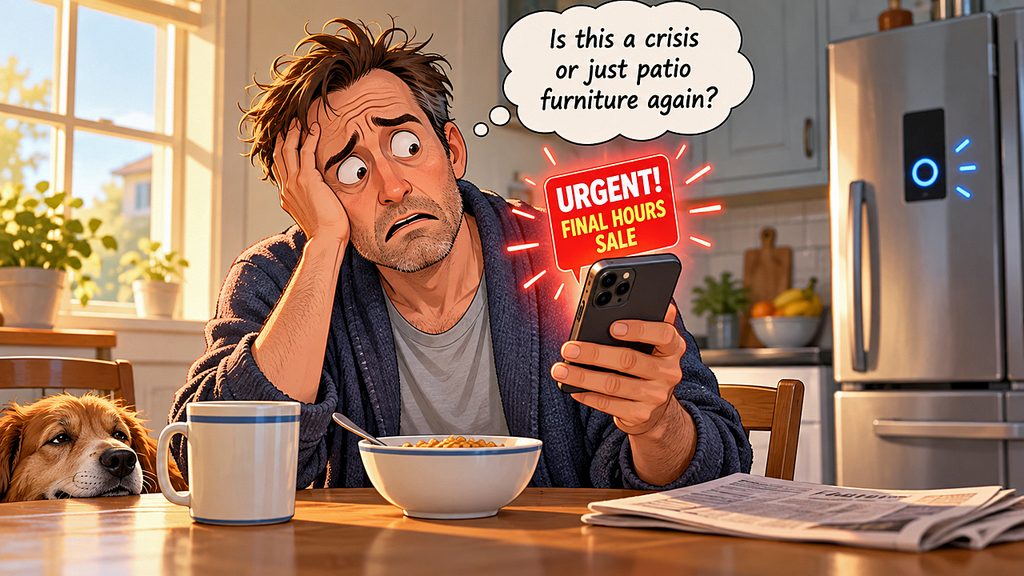
Thanks to the onslaught of urgent alerts, the average American can be hit with seven emergencies before breakfast without leaving the house. Six involve limited time offers, expiring discounts, or last-ditch opportunities to save on products nobody intended to buy. The seventh concerns a software update for an appliance that was binned three years ago.
Such is life in a nation where everything requires immediate attention and almost nothing deserves it. Retailers have become especially skilled at manufacturing crises. A department store announces its FINAL HOURS SALE with the urgency once reserved for approaching Category-5 hurricanes.
An airline warns that only two seats remain at a certain fare, suggesting that failure to book at once could leave a family stranded in Cleveland forever.
Meanwhile, grocery stores send push notifications about avocados. Banks issue urgent alerts about policies nobody has read. Streaming services interrupt your browsing to report that a television series you watched briefly in 2022 has returned for another season.
Every message arrives bearing the same implicit warning: Something terrible will happen if this notification is ignored.
The workplace has adopted similar tactics. Routine requests are marked URGENT. Emails arrive with high-priority flags. Meetings are scheduled to address problems that could have been resolved by not scheduling meetings.
Even minor disagreements have acquired catastrophic dimensions. A restaurant changes its menu and social media declares war. A celebrity expresses an opinion and civilization reportedly hangs in the balance. Somebody uses the wrong pronoun and the Internet assembles an emergency response team consisting entirely of people with no relevant qualifications.
The problem is not merely irritation. Constant artificial urgency has destroyed the distinction between inconvenience and catastrophe. When every sale is a last chance, every update is critical, and every disagreement represents an existential threat, actual emergencies must compete for attention with discounted patio furniture.
Companies call this engagement. Psychologists call it alarm fatigue. Ordinary people call it Tuesday.
The obvious solution would be to reserve urgent warnings for circumstances involving genuine danger. Unfortunately, the proposal would first require approval from marketing departments, which are expected to announce their decision in an important notification requiring immediate action.
Want more digital blasphemy? Fill your boots at technological mayhem.