
WNBA Fights Quietly Encouraged as League Tries to Boost Attendance
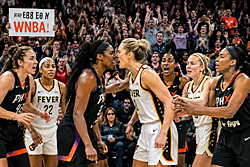
A confidential memo obtained by The Pug Bus reveals that league officials have quietly suggested encouraging WNBA fights as part of an effort to boost attendance, television ratings, and social-media engagement.
The fourteen-page memo, titled Competitive Intensity Initiative, never uses the word “fighting.” Instead, it urges teams to create more “organic conflict opportunities” and “emotionally authentic physical disagreements.”
According to the memo, league research found that attendance increases 18 percent following games featuring at least one shove, while online engagement nearly doubles whenever two players have to be separated by an assistant coach.
“Fans respond strongly to unscripted interpersonal hostility,” the memo states. “Particularly when accompanied by pointing.”
Among the league’s recommendations are prolonged eye contact following hard fouls, strategic post-whistle disagreements, delayed intervention by teammates, and ensuring that confrontations occur within unobstructed camera range.
Players are also discouraged from hugging or otherwise reconciling until after the next commercial break.
WNBA Deputy Commissioner Marjorie Pell, 47, a former corporate branding consultant who refers to arguments with her husband as “domestic engagement events,” denied that the league is promoting violence.
“The WNBA categorically rejects fighting,” Pell said. “We are simply creating space for our athletes to express competitive emotions in ways that resonate with contemporary audiences.”
The memo also advises referees to allow “reasonable narrative development” before issuing technical fouls, particularly during nationally televised games.
Teams achieving quarterly benchmarks for competitive intensity may receive additional promotional support, including featured television appearances, enhanced social-media coverage, and slow-motion replays accompanied by commentators saying, “There is clearly some history between these two.”
League officials reportedly began studying the issue after discovering that clips of player altercations routinely attracted more views than game highlights.
One section of the memo warns teams against manufacturing confrontations, however, stressing that all hostility must appear spontaneous.
“Authenticity remains central to the WNBA brand,” the memo states.
“Players should never fight merely because cameras are present.”
The sentence is followed by an asterisk.
“Whenever practical, confirm camera presence before initiating competitive engagement.”
If you enjoy reading about the games and the gamesters who play them, here are more sporting life tales of gore and glory.