
Negative Rooting, Sports Fandom for the Morally Outraged
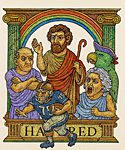
There exists a tradition in sports fandom, seldom acknowledged and rarely celebrated, in which the true sportsman finds his deepest pleasure not in the thrill of his team’s victory, but in the agony of others’ defeat. This is the fine art of negative rooting: the practice of cheering not for a team, but against one. It is a discipline requiring moral clarity, aesthetic judgment, and a curmudgeonly disposition that borders on the divine.
The negative rooter is not a fan. He is a connoisseur of collapse, a collector of hubris undone. He does not pledge allegiance; he withholds it. He does not wear team colours; he selects them for ritual burning. He is, in short, the sports equivalent of the man who attends weddings solely to object.
One must begin by understanding that negative rooting is not mere contrarianism. It is not the adolescent thrill of booing for booing’s sake. It is a principled stance, often born of betrayal. Consider the man who once rooted for the Buffalo Bills, only to watch them lose four Super Bowls with the consistency of a metronome. He now roots against them with the fervour of a jilted lover who has taken up voodoo.
Negative rooting expands one’s horizons. The positive rooter is shackled to a single team, doomed to suffer its mediocrity year after year. The negative rooter, by contrast, enjoys a promiscuous freedom. Each week offers a new target, a fresh opportunity to boo. It is like test-driving hatred, or leasing contempt with an option to renew.
There is, too, the matter of merchandise. The positive rooter must wear the same cursed logo until death or disillusionment. The negative rooter, however, enjoys the full range of sporting goods. He may purchase a rival’s cap solely to [spit] in it. He may acquire a team’s mug for the express purpose of serving guests lukewarm coffee in it. He may even wear a jockstrap emblazoned with the logo of a despised franchise, purely for ironic effect.
One must also consider the improvisational aspect. When one’s usual nemesis fails to qualify for the playoffs, one simply picks a surrogate. The Denver Broncos, for instance, provided rich opportunities for negative rooting in Super Bowls XXI, XXII, and XXIV. Their quarterback, John Elway, bore an uncanny resemblance to Walter Mondale, which only enhanced the experience. One felt one was booing not merely a sports figure, but a failed presidential candidate in shoulder pads.
Negative rooting may be directed at individuals. One may follow a player from team to team, booing him with the consistency of a tax auditor. The reasons are varied: a tragic flaw worthy of Sophocles, an unfortunate hairstyle, an excess of jewelry, or simply the way he chews gum. One need not justify one’s disdain. One need only feel it.
Sometimes, in the course of booing, one finds oneself seduced. A team one negrooted against for years finally collapses in a way so poetic, so satisfying, that one begins to root for their continued failure. This is the paradox of the hate-love relationship: the deeper the loathing, the more intimate the bond.
Consider the Gerry Faust era at Notre Dame (1981–1985), a period of such exquisite mediocrity that it became a kind of devotional experience for the seasoned negrooter. Faust, a high school coach inexplicably elevated to the helm of college football royalty, delivered five years of spiritual disappointment. Each game was a liturgical exercise in unmet expectations. One did not merely root against Notre Dame; one communed with its unraveling.
There are, of course, ethical boundaries. It is considered poor form to wish physical harm upon a player. However, should such harm occur, one may cheer lustily in the privacy of one’s living room. The executive council of the Negative Rooting Association (N.R.A.–not that one) has ruled that schadenfreude is permissible, provided it is not premeditated.
Anecdotes in sports fandom abound. One Philadelphia resident developed a dislike for the Eagles because he hated Buddy Ryan. After he had been transferred to Dallas, he developed a dislike for Jerry Jones. Thus, when the Eagles play the Cowboys, he refuses to watch their games. “I do not want anybody to win,” he explains. This is the zenith of negative rooting: a state of pure, unadulterated antipathy in which victory itself is the enemy.
And then there are moments of collective ecstasy. The 2007 New England Patriots entered Super Bowl XLII undefeated, smug, and coached by a man who resembled a taxidermist in a hoodie. America, united in loathing, rooted against them with the fervor usually reserved for Bond villains. The Giants, led by Eli Manning and a helmet-catch that defied physics and taste, delivered the upset. It was not merely a win–it was a moral correction.
Of course, not every negrooting one-night stand ends in satisfaction. In Super Bowl XXVII, the 1993 Buffalo Bills were expected to provide a worthy foil to the Dallas Cowboys. Instead, they collapsed in such operatic fashion–losing 52–17–that even the most hardened negrooter felt a twinge of pity. It was a cautionary tale: sometimes your enemy wins so decisively that it robs you of joy. Negative rooting, like jazz, requires tension.
In conclusion, negative rooting is not a pathology. It is a philosophy. It is the art of finding joy in the downfall of others, of transforming disappointment into ritual, of elevating booing to a form of prayer. It is, in short, the only sane response to modern sport.
If you enjoy reading about the games and the gamesters who play them, here are more sporting life tales of gore and glory.