CDC Estimates That Everybody Will Be on the Autism Spectrum by 2035
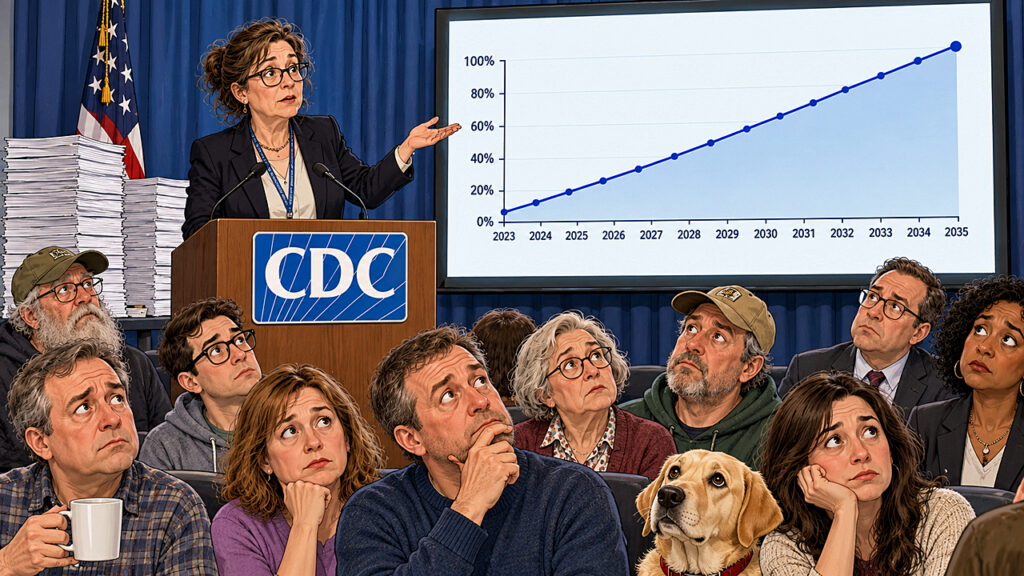
The Centers for Disease Control and Prevention today revised its autism prevalence model upward for the ninth consecutive quarter, projecting that 100% of the U.S. population will meet diagnostic criteria for inclusion on the autism spectrum by early 2035, “barring unforeseen advances in normalcy.”
“We’ve expanded the criteria responsibly,” said Dr. Miriam Holt, Deputy Director of the Office of Neurodevelopmental Trend Forecasting, fidgeting with a laminated flowchart.
“Liking routine. Having strong opinions about music. Taking the same route to the hardware store. These are all now Tier 2 indicators, pending Tier 1 review.”
The revised CDC Neurodevelopmental Screening Addendum, distributed in a 4-point font nobody was expected to read, adds “preferring restaurants you’ve already been to,” “explaining a hobby uninterrupted for more than ninety seconds,” and “owning more than one flashlight” to the qualifying behaviors list.
Holt confirmed the agency is fast-tracking a Tier 1 designation for “having a favorite chair” pending peer review, and noted internal modeling suggests “expressing a preference of any kind” could qualify by Q1 2027.
Family members interviewed for this report expressed measured concern. “My husband alphabetizes the spice rack,” said Donna Petrillo, 54, a dental-office receptionist from Reading, Pennsylvania. “We always just called that Gary. Now there’s a pamphlet.”
The CDC stressed that improved detection should not be confused with a true rise in underlying traits, a distinction officials acknowledged will become “definitionally unfalsifiable” once the criteria include “existing.”
Holt closed the briefing by noting the agency’s own staff self-screened at 97% prevalence, “which we’re treating as a control group.”
The Pug Bus News Desk contains a curated list here of the best news that’s unfit to print.