Choose a Default Font Wisely, Your Personality Is on Display
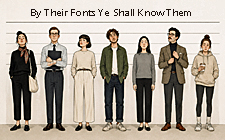
The personality you spend years and hundreds of Google searches developing is revealed when you choose a default font. Therapy, travel, guilty pleasures, minor betrayals. All of it distilled into a legible point type and a quiet click on “Set as Default.”
Lenora P. Gable, M.D., at the Institute for Stereotypical Behavior in Fort Myers, Florida, has spent two decades studying what she calls “glyph-based confessions.” Her findings about the most popular fonts are not encouraging.
According to Dr. Gable, Calibri font users are “the national baseline.” Friendly, unobtrusive, and designed to offend no one except people who notice things. Roughly 78% of Calibri users describe themselves as “easygoing,” while 92% have rehearsed a confrontation in the shower, a confrontation they will never have. Compliant, yes. Quietly vengeful, also yes. Calibrians forgive in theory and keep receipts in practice.
The Times New Roman font, says Dr. Gable, is selected by people “who believe legitimacy can be summoned through ritual.”
The Typography Ethics Board in New York City reports that Times New Roman users are 63% more likely to cite sources in casual conversation and 41% more likely to think that citing sources counts as a personality. They cling to legitimacy like it Is a life raft, or a blanket that has seen things.
There are no studies, only warnings, about the Comic Sans font. Dr. Gable’s team attempted a longitudinal analysis of Comic Sans, but the test subjects kept bringing cupcakes to the lab and undermining the control group.
Comic Sans users, Dr. Gable warns, are a special case, not because they are irredeemable, but because they have chosen joy in a way that society cannot process without filing a complaint.
The Arial font is a practical compromise mistaken for neutrality. Arial users believe they are avoiding judgment while quietly inviting it. Correlation data suggests a strong overlap with people who say “I’m fine with whatever” and then produce a detailed list of conditions.
The Garamond font is economical, elegant, and faintly superior. It is the choice of those who have read something difficult and want you to know it. The Typography Board has found a statistically significant tendency among its users toward sentences that begin with “Historically.”
The Courier New font represents nostalgia weaponized. Courier New people want their emails to feel like a screenplay about accountability. They are known for a high incidence of late-night revisions and a belief that formatting equals structure.
The main take away from Dr. Gable’s work is cautionary. You are not your font, except when you are, which is most of the time.
Therefore, she recommends choosing one of the following fonts that are least likely to get you ridiculed.
Verdana, if you believe clarity is a moral good. It will increase line spacing until conflict disappears. Helvetica, for the quietly superior minimalist who has opinions about chairs, and Georgia for the person who would like to seem literary without risking actual literature.
The Typography Ethics Board notes that these choices signal “measured self-awareness with limited downside,” which is as close to virtue as modern typography allows. Select one, commit to it, then act as if your inner life is not quietly formatted to match.
Read more life-changing dispatches from a culture officially in decline by clicking here.