Signs That Nobody Knows What Business Casual Means Anymore
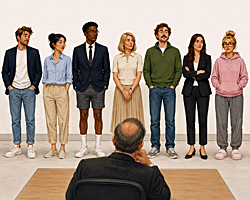
Business casual once meant khakis, loafers, and a collared shirt without a tie worn by people who wanted to look employable without appearing eager. Today, business casual can mean anything from a bowtie to clothing purchased beside the motor oil at Costco.
Nobody is sure when the dress code collapsed, but workplace historians believe the decline already had a foot in the door when sneakers entered offices without setting off alarms. Eventually nobody knew what business casual meant anymore.
Some people argue that a blazer confers diplomatic immunity. According to Martin Kellerman, 46, a regional sales manager who owns seven identical blue shirts, virtually anything becomes acceptable if you put a blazer over it. T-shirt? Blazer. Jeans? Blazer. Shirt advertising a 2009 chili cook-off? “With the right blazer, you are practically management.”
Meanwhile, jeans have completed a forty-year corporate evolution. They used to be excluded from business casual. Then dark jeans became acceptable. Then regular jeans. Then distressed jeans. Human Resources currently draws the line at visible kneecaps, although enforcement varies by floor in some offices.
Sneakers now have subclasses. Minimalist white sneakers are still business casual. Running shoes are too casual. Expensive running shoes that nobody would actually run in are apparently executive casual.
Khakis, once the cornerstone of business casual, now suggest a regional bank manager in 1998 or a man about to explain the features of a midsize sedan.
Women have wisely stopped asking for clarification regarding business casual. Denise Harwood, 39, an insurance underwriter who keeps emergency earrings in her desk, says her office defines business casual as “professional but comfortable,” a phrase she considers legally meaningless. “That could describe a pantsuit or pajamas with pockets.”
To make matters more confusing, Friday has corrupted the rest of the week. After Casual Friday had been established, Thursday became “basically Friday.” Monday was granted leniency because everyone was tired. Wednesday became a hybrid day. Tuesday eventually surrendered. Now the dress code depends on who is wearing it.
Trevor Mills, 28, a software analyst who has never owned an iron, recently attended a quarterly planning meeting wearing black jeans, sneakers, and an untucked shirt. His supervisor complimented him for dressing appropriately. Mills had worn socks.
For a curated list of Signs&Wonders, click here.