
Solitaire: America’s Most Trusted Therapist
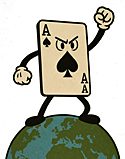
In the age of algorithmic surveillance and artisanal loneliness, one game has emerged as the silent savior of the modern psyche: Solitaire. Not the metaphorical kind played with your emotions in a Brooklyn wine bar, but the pixelated ritual of dragging virtual cards across a green felt abyss while pretending to work.
Solitaire is more than a game. It is a lifestyle brand for the emotionally unavailable–the only therapist that doesn’t charge $300 an hour or ask about your relationship with your father. It simply waits–patient, judgment-free, ready to shuffle your trauma into neat stacks of red and black.
And let’s be honest: it’s the only thing keeping the American workforce from spontaneously combusting. Every time a middle manager opens Solitaire between Zoom calls, an angel gets its wings and HR avoids another burnout seminar.
The Rise of Solitaire: A Brief History of Avoidance
Solitaire was first installed on Windows 3.0 in 1990, allegedly to teach users how to use a mouse. This is propaganda. Solitaire was clearly designed by a rogue psychologist at Microsoft who understood that the human condition is best treated with repetitive, mildly satisfying tasks that simulate control in a chaotic universe.
Since then, Solitaire has become the most-played game in history, even beating out “pretending to be okay.” It’s the only game that requires no internet, no friends, and no self-esteem. Just you, your cards, and the creeping suspicion that this is all there is.
Solitaire as Spiritual Practice
In recent years, Solitaire has been rebranded by wellness influencers as a form of “digital mindfulness.” Gwyneth Paltrow reportedly plays Klondike while micro-dosing on moonlight and sipping bone broth infused with ancestral regrets. Tech bros in Palo Alto have started Solitaire retreats, where participants play in silence for seventy-two hours and emerge with a startup idea and a renewed sense of nihilism.
There’s even a growing movement to canonize Solitaire as a religious sacrament. The Church of the Infinite Shuffle teaches that every failed game is a lesson in surrender, and every win is a reminder that the universe is rigged but occasionally merciful.
SEO, Solitude, and the Search for Meaning
Of course, we must acknowledge the real reason Solitaire continues to thrive: keywords. “Solitaire” is one of the most searched terms on the internet, right up there with “how to disappear” and “is my boss a lizard.” This article exists, in part, to exploit that fact. If you’ve made it this far, congratulations–you’ve been algorithmically harvested. But isn’t that the point? Solitaire is the perfect metaphor for late-stage capitalism: a game that pretends to be winnable, rewards you with fireworks for basic competence, and keeps you coming back with the promise that next time, you’ll finally get it right.
Conclusion: Solitaire Will Outlive Us All
When the last server crashes and the final influencer logs off, Solitaire will remain. It will be played on dusty laptops in post-apocalyptic bunkers. It will be taught to children as a cautionary tale. It will be the only surviving record of our civilization’s attempt to make sense of itself through cards, silence, and the desperate hope that something–anything–will line up.
So play on, brave soul. Stack your kings, chase your aces, and know that in the great cosmic tableau, you are a solitary card in the deck of existence. That’s okay. Solitaire understands.
For more red-hot cultural dispatches from a culture in decline, clickhere and duck for cover.