
America Seeks Better Health Awareness by Installing Toilet Cams
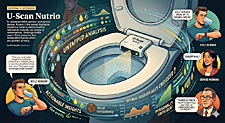
A new wave of AI-powered toilet cams promises to analyze Americans at their most vulnerable, reflective, and nutritionally candid moments.
According to a Consumer Reports study, the average person spends 416 days in the bathroom, a figure that rises to 612 days if scrolling, hiding, and reconsidering life choices are included.
“This is untapped data,” said Scott Hickle, who has built a career on refusing to let things go. “Americans are flushing away actionable insights along with evidence.”
Toilet industry insiders estimate that 78% of people are now “open to the idea” of being medically evaluated mid-squat, while 22% are still pretending this is about health and not control.
Kyle Renner, 34, a “hydration strategist” who owns three reusable water bottles and trusts none of them, installed a smart toilet in January.
“It told me I was dehydrated, which felt invasive but fair,” Renner said, adjusting a smartwatch that has yet to make him more calm. “Now I drink water out of spite.”
Meanwhile, Denise Morano, 52, a part-time Pilates instructor and full-time judge of other people’s posture, says the toilet cam device has transformed her relationship with her body.
“It flagged my ‘bathroom habits’ as suboptimal,” she reports laughing. “Which is how I’ve described my ex-husband for years.”
Devices like the U-Scan Nutrio and Throne One Smart Toilet Sensor clip directly onto your toilet, scanning output and quietly forming opinions. One model even uses a downward-facing camera that manufacturers insist cannot see anything “recognizably human,” a term that has comforted few people.
In a two-week trial, 63% of users reported feeling “personally criticized” by their toilet, while 41% said they had begun apologizing to it.
“These devices create accountability,” said Dr. Leonard Voss, who has spent the last decade studying flow events.
“For the first time, people are confronting patterns they previously blamed on destiny.”
Toilet cam companies insist that all data is anonymized, encrypted, and treated with respect, much like your browsing history before it betrays you.
“We do not know who you are,” a U-Scan Nutrio company spokesperson said. “We only know everything else.”
Still, some users remain skeptical. “I am not convinced my toilet needs Bluetooth,” said Harold Finch, 68, a retired accountant who believes seating devices should remain silent. “If it starts making suggestions, I’m moving.”
Consumer Reports predicts this initial toilet cam rollout is just the beginning. Future models may integrate with dietary apps, fitness trackers, social media platforms, and potentially your mother. Which, to be fair, will still be more constructive.
More digital blasphemy awaits you at technology satire