No Digital Fallacy Allowed

The digital fallacy is the error of judging a work primarily by the method of its production rather than by the qualities of the work itself. It is criticism as practiced by people who would rather inspect the kitchen than taste the meal.
Decades ago, literary critics began warning against the intentional fallacy, the mistake of judging a work according to what its author intended rather than what actually appeared on the page. But a poem either succeeds or it does not. The author’s private hopes, childhood trauma, or caffeine intake are interesting biographical details, not standards of criticism.
The digital fallacy commits a similar short-sighted error. Instead of asking what the work says, it asks how the work came into existence. Was artificial intelligence involved? How much? Which model? Did it suggest the title? Correct the punctuation? Rewrite three paragraphs? The questions multiply while the work itself often sits unread.
Suppose two essays are visually indistinguishable. They contain similar ideas, similar sentences, and similar humor. One is believed to have been written entirely by a human. The other is revealed to have been “assisted” or (gulp) wholly written by artificial intelligence. What”s the difference? Only the source of the writing. Yet for many readers, that alone is enough to alter their judgment and/or acceptance of the AI piece. The work has become less legitimate.
That is the Digital Fallacy.
This is not an argument for deception. A student who submits machine-generated work under false pretenses deserves censure. So does a journalist who invents quotations or a novelist who lies about authorship. Honesty still matters, but once the process has been disclosed, the work deserves to stand or fall on its own merits.
Every generation adopts new tools. Fountain pens replaced quills. Typewriters replaced fountain pens. Word processors replaced typewriters. Search engines replaced card catalogs. Spell check corrected our mistakes. Grammar software became commonplace. Each innovation provoked pearl clutching because “authentic” writing had finally come to an end. Curiously, nobody now demands to know whether Shakespeare drafted Hamlet with a goose quill or a swan feather.
Artificial intelligence is merely the latest addition to a very long line of tools that assist writers without relieving them of the responsibility to think.
The question worth asking is not whether a machine participated. It is whether the finished work is any good. Does it make you laugh? Does it surprise you? Does it teach you something you had not considered? Does it move you? Those are literary questions. The brand name of the software used during writing and/or revision is not.
The Digital Fallacy mistakes provenance for quality. It elevates genealogy above craftsmanship. It assumes that knowing where a sentence came from tells us more than reading the sentence itself. It does not.
If a piece is dishonest, criticize the dishonesty. If it is poorly written, criticize the writing. If it is derivative, unimaginative, pompous, or dull, criticize those things instead. But absent deception, judging a finished work chiefly because artificial intelligence participated in its creation commits a curious error. It substitutes a forensic investigation for literary criticism.
In the end, readers owe every piece of writing exactly one courtesy before rendering judgment. Read it. Everything else is secondary.
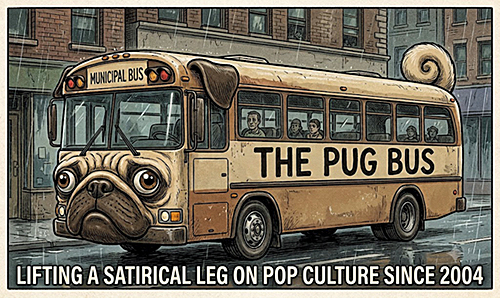
This essay is published under the editorial supervision of T. J. Eckleburg, the all-seeing eyes of The Pug Bus. He continues to defy readers to decide the provenance question with the naked eye.