Podcast Failure Signs: Why Most Die Before Episode #10
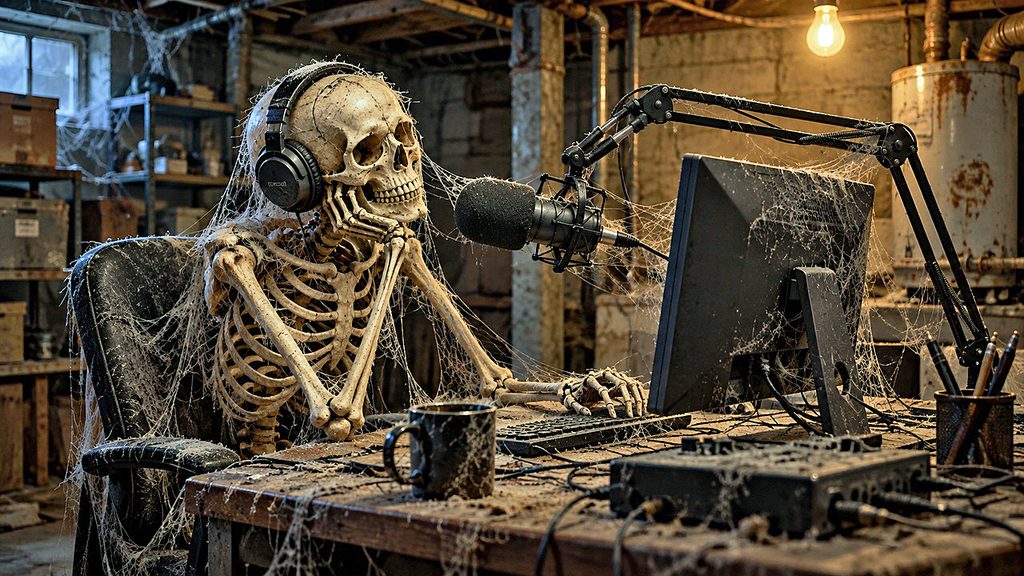
The earliest podcast failure signs were once confined to licensed engineers, monolithic transmitters, and gentlemen wearing ties in soundproofed rooms. Today anyone with a functioning respiratory system and a cheap plastic apparatus that plugs into a computer terminal can declare himself the founder of a global media empire. Unfortunately, the warning signs are almost always visible from the opening broadcast, ensuring that most of these empires crumble before the tenth episode has dried on the server.
The origin of the podcast epidemic can be traced to the summer of 2003. Christopher Lydon, 86, a distinguished radio journalist who had spent half a century speaking into expensive metal meshes without blinking, sat down with Dave Winer, 71, a software pioneer whose chief recreational pleasure lay in attaching digital envelopes to things that did not request envelopes. Together they tied spoken audio to an RSS feed and broadcast it to six confused individuals possessing high-speed office internet connections.
Soon afterward Ben Hammersley, 50, a British print journalist, slapped the words “pod” and “broadcast” together. A dark portal opened, and millions of desk workers suddenly believed the cosmos required their opinions on cold brew coffee and unsolved midwestern homicides.
The premature expiration of a podcast, known in corporate circles as podfade, is entirely predictable. If any of the following conditions exist in your parlor or guest room, begin packing away the boom arms.
The primary omen appears when the first twenty-four minutes of Episode Two consist of two adult men laughing about an inside joke regarding an alternator, while the listener waits in traffic behind a cement truck. When an audio enterprise treats basic conversational discipline as a luxury, the end is nigh.
A second doomsday scenario involves financial delusions. When a creator purchases three hundred custom embroidered T-shirts, five foam windscreen covers bearing a Photoshopped trademark, and an eight-channel studio console, yet possesses only four recorded minutes of two acquaintances debating the nutritional density of almonds, insolvency is guaranteed.
A third herald of doom is the guest spiral. Episode One features your most charismatic childhood confidant. Episode Two features an uncle who claims he once shook hands with Walter Cronkite in an airport vestibule. By Episode Five, you are desperately texting a retired municipal water clerk to inquire if he has forty-five minutes to talk about his collection of ornamental spigots.
The final death knell is acoustic amateurism masquerading as intimacy. If your podcast captures the thud of a golden retriever scratching its ear beneath the table, the chatter of an air fryer finishing its cycle in the kitchen, or the moist, cavernous respiration of a host who refuses to sit more than two inches from the foam diaphragm, your audience will vanish into thin air quicker than a fart in a hurricane.
At the end of the day, a successful podcast demands relentless labor, an unnatural appetite for public indifference, and the realization that almost nobody cares to hear your opinions on sourdough starters. Those who fail to understand this reality will find their microphones relegated to a closet shelf, resting sadly beside the bread maker and the unused rowing apparatus.
For a curated list of Signs&Wonders, click here.