
Flawless Organic Apple Sent Straight to Crisper Drawer to Die
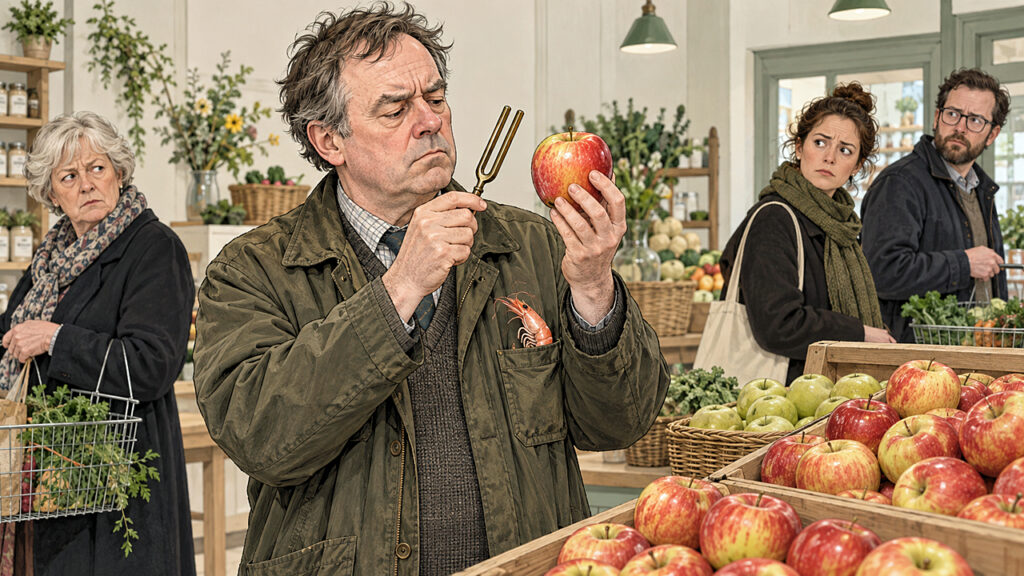
Arthur Povey, 44, a municipal drain inspector who keeps a single prawn in his breast pocket for luck, spent part of Tuesday afternoon at the organic cooperative testing twenty-two organic apples (Honeycrisps) with a brass tuning fork and a practiced ear.
Arthur, who selects his apples with the care other men reserve for wives, racehorses, and suspicious moles, was seeking an internal ring of B-flat, the unmistakable sign of cellular integrity, before sliding the winning specimen carefully into a damp linen tote. The purchase cost £3.40, which Arthur considered an investment in his own moral standing.
Upon returning home, Arthur bypassed the fruit bowl, opened the bottom bin of his Kelvinator, and placed the Honeycrisp in next to a leaking turnip. The crisper already housed half an inch of cold gray broth, a lime that had hardened into a billiard ball, and a carton of soured milk that doubled as a doorstop.
“A crisp apple requires an incubation period,” said Arthur’s sister, Brenda Povey-Jones, 48, an unlicensed notary whose left trainer whistles whenever rain is due in Yorkshire. “If you eat an apple immediately, you are merely chewing on haste. Arthur understands that fruit must make peace with the dark first.”
By Thursday of that week, the Honeycrisp had lost its tautness. By Sunday, its skin had begun to weep a thin amber grease, loosening itself from the flesh like wet wallpaper in an abandoned vicarage.
Povey plans to remove the drawer on Michaelmas, prod the resulting brown soup with a plastic biro, and blame Spanish lorry drivers for the decline of Western fiber.
Enter The Pug Bus Food Pavillion, where the menus are sticky and the health inspector has stopped returning our calls.