Book of Daze: Shirt You Never Wear Day
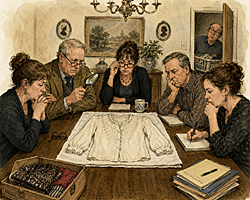
Shirt You Never Wear Day is observed each year by people who own at least one shirt or top they have kept for a decade, worn twice, and cannot bring themselves to donate.
This day is marked by private, closet-based ceremonies: the removal of the shirt from its position at the back of the rod, a brief examination conducted under better light than it usually receives, and a moment of reckoning with the original purchase — its optimism, its price point, the version of your self it was meant to convey — addressed without flinching.
The observance of Shirt You Never Wear Day has grown since the establishment of the Foundation for Undeployed Garments in 2019, whose motto, You Were Going to Wear It to Something, has not been printed on T-shirts yet for reasons that participants understand but will not discuss.
Maureen Schaffner, 57, title insurance examiner, owns a linen blouse purchased for a wedding in 2014. She holds the blouse at arm’s length in the natural light of her bedroom window. “I wore it to the wedding,” Schaffner says. “I wore it once. I told myself I would wear it again when the occasion was right. I have since attended three weddings, a retirement party, and a baptism. The occasion was never right. Something about the sleeves.”
Doug Ferrier, 61, community college registrar, who has owned a striped button-down he describes as “festive, in theory” since the second Obama administration, offered it briefly to a family member who declined it.
“He looked at it and said, ‘No, that’s yours,'” says Ferrier. “He said it very quickly. Like he had thought about it before. Like he had been prepared for this moment and knew his answer.”
Janet Coolbaugh, 49, payroll coordinator, who owns a going-out top she bought in 2017 for a going-out phase she decided not to enter, refolds the shirt and places it back in the drawer.
“I like knowing it’s there,” Coolbaugh sighs. “It represents a possibility. It says: you could, on any given Saturday, decide to be different. You don’t have to. You just could. I keep it for the could.”
At day’s end, observers are asked to make one decision and live with it. The Foundation for Undeployed Garments does not specify which decision. Both are considered observances in good standing.
Browse a curated list of the Book of Daze greatest hits here.