Book of Daze: Unread Sunday Newspaper Day
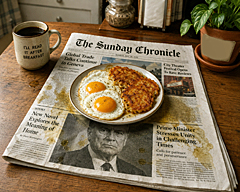
Unread Sunday Newspaper Day commemorates one of our most enduring acts of optimism: buying an enormous Sunday newspaper while sincerely believing there will be time to read it.
Long before glowing screens monopolized everyone’s attention, respectable citizens spent Sundays hauling in newspapers the size of upholstered loveseats. The papers contained world affairs, investigative journalism, theater reviews, gardening advice, travel supplements, recipes, coupons, and enough advertising circulars to alter local weather patterns.
Each person who bought a Sunday newspaper made the same vow. “I’ll get to it after breakfast.” Historians now recognize this as one of civilization’s most ambitious works of fiction.
Tradition credits the invention of Unread Sunday Newspaper Day to Barnaby Grunt, 31, who purchased a copy of The Sunday Chronicle intending to become “better informed.” Before noon, however, the paper had become a placemat, two coasters, wrapping for several fish heads, and a temporary shim beneath a wobbly table leg.
At sunset Barnaby discovered he had read only the weather forecast, and that by accident. Future generations honored him as the Patron Saint of Good Intentions.
Today, participants observe Unread Sunday Newspaper Day in a variety of ways. Gertrude Muck, 54, an insurance filing clerk who alphabetizes thunderstorms according to emotional intensity, reports.
“I order the largest newspaper available and leave it folded exactly as it arrived. Opening it creates expectations. Throughout the day I move it from the kitchen table to the sofa, then to my favorite chair, giving the appearance that reading remains imminent. Around six o’clock I place my reading glasses on top of it to demonstrate renewed commitment. Before bed I recycle the entire thing with complete confidence that nothing important happened.”
Rupert Finch-Hatton, 31, is a private investigator who collects expired warranties because he believes they deserve closure.
“Most people think the newspaper’s purpose is delivering information. That’s adorable. I use the travel section to polish windows because optimism leaves fewer streaks. The arts pages are reserved for cleaning spectacles, since criticism naturally attracts fingerprints. The coupon insert lines the vegetable drawer in my refrigerator. By Sunday evening every section has fulfilled its destiny except the news, which remains blissfully unread. I consider that a perfect week.”
Penelope Zap, 9, unemployed, can smell when adults are pretending to enjoy documentaries. “I don’t read newspapers because the words are too small and they keep interrupting the comics. My grandpa says they’re full of important news, but our cat sleeps on the opinion section every week, so I think that’s what it’s really for. After breakfast my brother and I build forts out of all the parts Dad keeps meaning to read. The business section makes the strongest walls because nobody ever opens it.”
By nightfall, millions of unread Sunday newspapers complete their annual migration from front porch to recycling bin without suffering the inconvenience of informing anyone.
Anthropologists regard Unread Sunday Newspaper Day as one of humanity’s purest expressions of hope: the unwavering belief that next Sunday will somehow be less busy than this one.
Browse a curated list of Book of Daze entries hand-picked for you.